How Auracast™ enabled assistive listening in a large-scale event
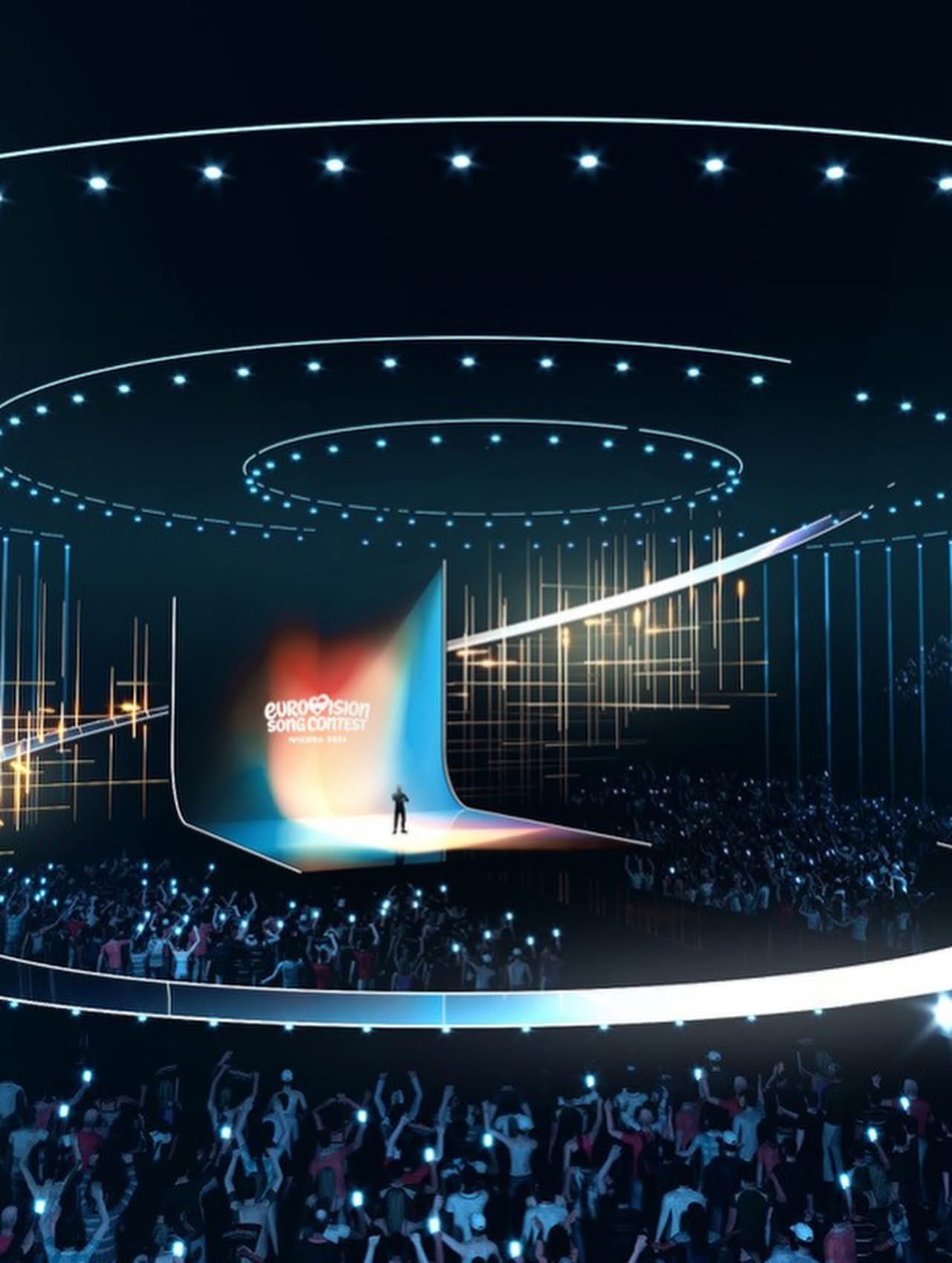
Each year, the Eurovision Song Contest brings together thousands of people in one of Europe’s most important music and television events. In 2026, Vienna’s Stadthalle hosted the competition with a clear objective: to ensure access to the audio content for all attendees, including those with hearing loss.
An accessibility challenge in a high-density RF environment
Hearing accessibility in large venues depends not only on regulatory compliance, but also on the technical feasibility of the available solutions.
The European Accessibility Act sets out the requirement to provide assistive listening systems at high-attendance events. However, its implementation can be constrained by existing infrastructure and the technical complexity of each venue.
At Vienna’s Stadthalle, the RF environment presented an extremely high density of wireless systems. The venue operated simultaneously with hundreds of RF microphones, DMX lighting systems, and multiple transmissions distributed across the available spectrum.
Under these conditions, installing a traditional induction loop system was not viable. The complexity of the required infrastructure, combined with spectrum saturation, made it difficult to ensure homogeneous and stable coverage throughout the venue.
Spectrum analysis and Auracast™ deployment
To identify the most suitable solution, the Hearit team conducted a full analysis of the venue’s radio spectrum.
The study determined that the 2.4 GHz band offered the most suitable conditions for deploying an Auracast™-based solution.
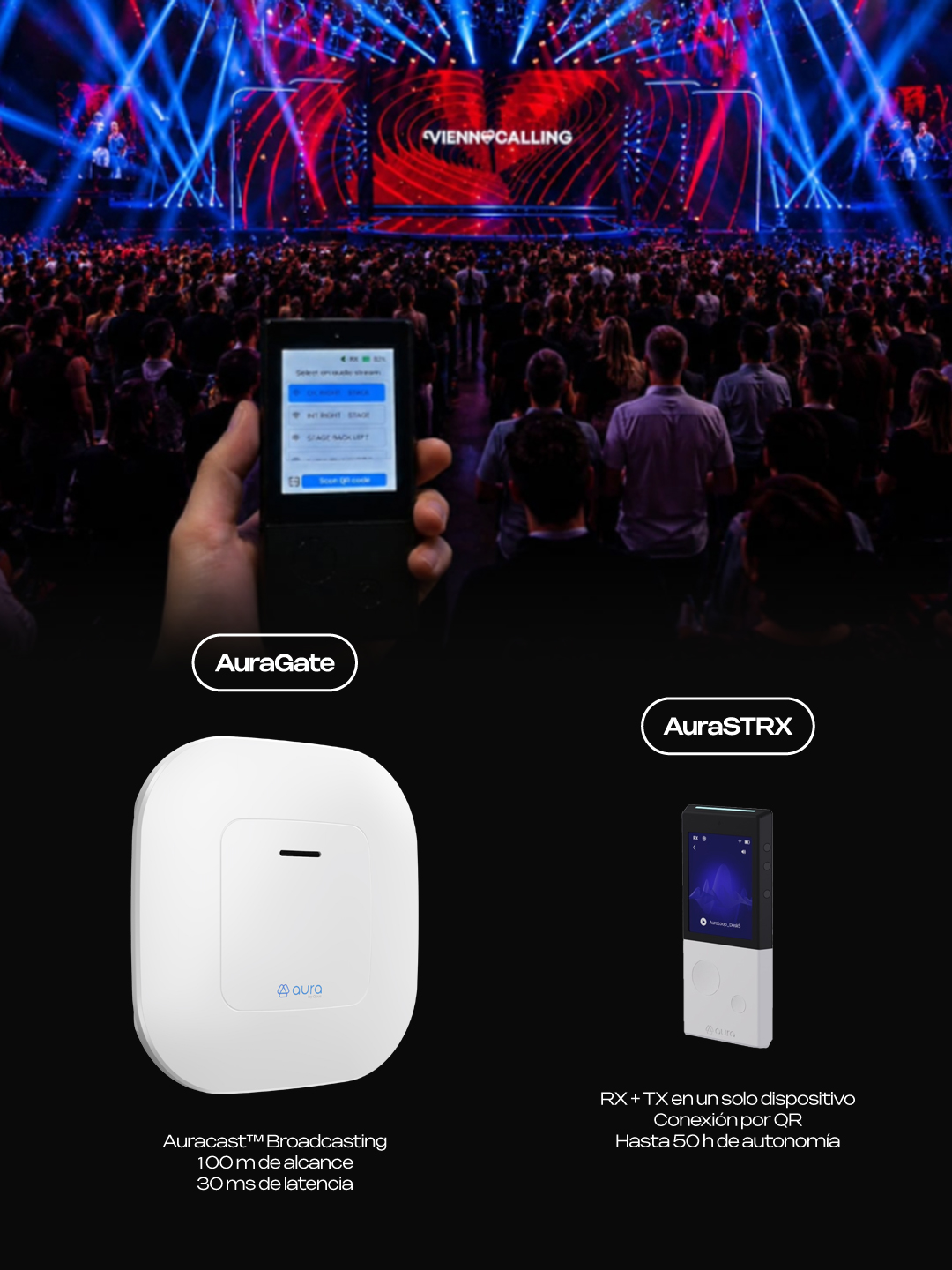
Based on this analysis, a distributed architecture was implemented using AuraGate transmitters, strategically positioned to cover the different areas of the Stadthalle and ensure signal continuity and coverage redundancy.
Attendees requiring assistive listening used AuraSTRX receivers, which allow autonomous selection of the audio channel via an intuitive touchscreen interface, without the need for technical assistance.
System configuration and optimisation were carried out on-site using the AuraCONNECT application, which allowed operational parameters to be adjusted during the event. Among other settings, mono audio conversion was enabled to maximise speech intelligibility within the venue’s acoustic environment.